Intro
Most fish keepers refill their aquariums with tap water, using a water conditioner to neutralize chlorine and chloramine and make it safe for fish. And it makes sense—it’s convenient, inexpensive, and readily available. This is my preferred method for my 45-gallon and 10-gallon aquariums.
However, for my 5-gallon and 2.5-gallon tanks, I opt for reverse osmosis (RO) water instead. Why the difference?
In this article, I’ll break down tap water vs. RO water, the benefits of each, why I use different water sources for different tanks, and when I use each for top-offs and water changes. At the end, I’ll give you a simple checklist to help determine which option makes the most sense for your aquarium.
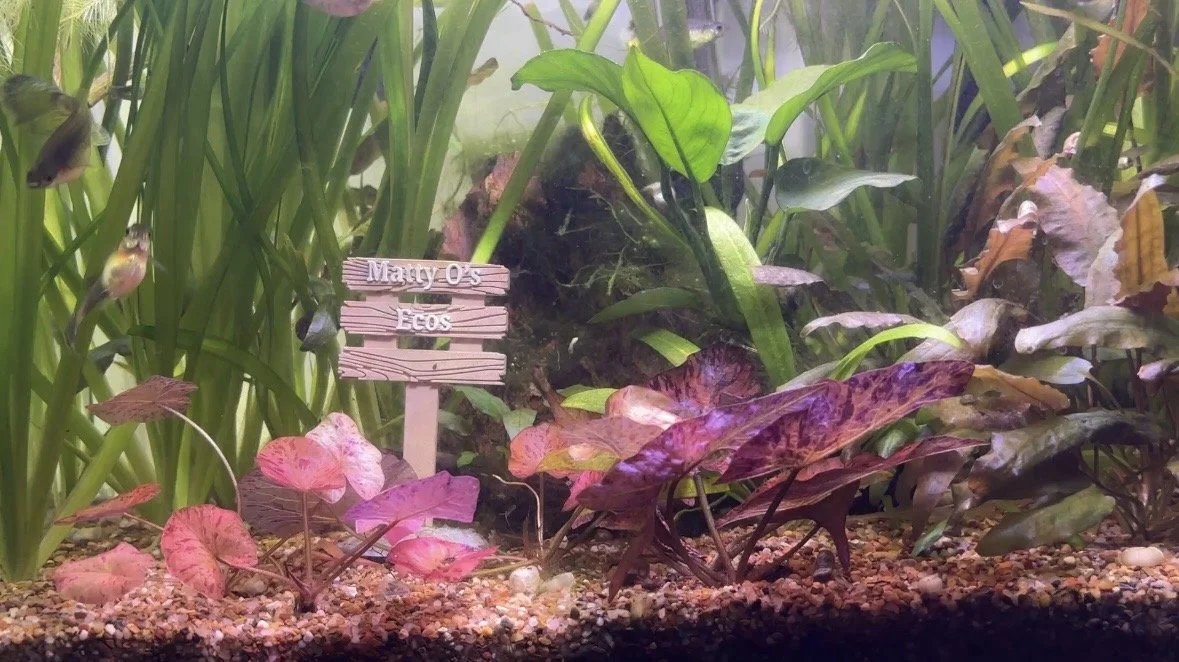
My 10-gallon tank
Understanding General Hardness (GH) and Carbonate Hardness (KH)
Most of us have easy access to tap water, but it can greatly differ in chemistry depending on your geographic location. Tap water contains dissolved minerals and ions from the water source and treatment system. Some of these dissolved substances determine two important aquarium water parameters: general hardness (GH) and carbonate hardness (KH).
GH primarily measures dissolved calcium and magnesium ions. A higher GH means the water has more dissolved calcium/magnesium. Fish and invertebrates need dissolved minerals for normal physiological processes. Calcium and magnesium are important for invertebrates such as shrimp and snails, which rely on adequate mineral availability for healthy exoskeleton and shell development.
KH measures carbonate/bicarbonate buffering capacity. The practical reason for caring about the KH of your water is pH stability. Higher KH generally means greater resistance to changes in pH, while very low KH provides less buffering and allows pH to change more easily.
The GH and KH of your local tap water can have a major influence on the success of your tank and its inhabitants. Different species have different requirements for mineral availability and pH stability. The good news is that testing kits are cheap and easy to use, and you can determine the GH/KH of your tap water and your tanks. When determining whether to use tap or RO water, this is the first step.
How is RO Water Different from Tap Water?
Reverse osmosis water is produced by forcing water through a semipermeable membrane, which removes most dissolved ions and other contaminants. The important thing to know about RO water is that it has very low GH, KH, and total dissolved solids (TDS) compared to tap water. A properly functioning RO system also removes chlorine, chloramine, and many dissolved contaminants.
At first glance, this might make RO water sound “cleaner” and better for an aquarium. However, removing dissolved minerals isn't always beneficial. Fish, plants and invertebrates still require minerals, and very low KH also means very little buffering against changes in pH.
Tap Water vs Ro Water: Pros and Cons
The main benefit of RO water is that it gives you greater control over your aquarium’s water chemistry. RO water starts with very low GH and KH, allowing you to remineralize it or mix it with tap water to achieve parameters appropriate for your tank. With tap water, you’re starting with whatever mineral content comes out of your faucet. You can still modify those parameters, but lowering hardness is generally more complicated than starting with RO water and adding minerals back as needed. Properly filtered RO water also eliminates the need to condition the finished water for chlorine or chloramine.
The downsides of RO water are primarily cost, convenience, maintenance, and water efficiency. There are several ways to access RO water: you can purchase it as needed, use a countertop RO system, or install an under-sink system that feeds a dedicated RO faucet. Each option adds some combination of cost, time, equipment, and maintenance compared with simply using conditioned tap water. Home RO systems also produce reject water during filtration, meaning some of the incoming water is discharged rather than becoming usable RO water.
RO water also isn’t automatically ready for every aquarium. Because it contains very little calcium, magnesium, and buffering capacity, it may need to be remineralized or mixed with tap water before being used for water changes. Using pure RO water without considering the needs of your livestock can result in water that is too soft or has insufficient buffering capacity.
This is why I recommend testing the GH and KH of your tap water before deciding whether you need to use RO water at all. Your tap water may already have great parameters for the fish, plants, or invertebrates you’re keeping. If that’s the case, using conditioned tap water is typically cheaper, easier, and more efficient. RO water becomes useful when your tap water doesn’t match the conditions you want to maintain and you need greater control over your aquarium’s water chemistry.
Why I Use Tap Water in Some of my Tanks
I have exclusively used tap water in my 45-gallon aquarium for over a decade, and I also use tap water in my 10-gallon tank. The main reason is simple: my local tap water already has suitable parameters for the organisms I keep in these tanks, with a GH of 7 and KH of 2. Since both tanks receive regular water changes, using conditioned tap water is also the easiest and most practical way to maintain them.
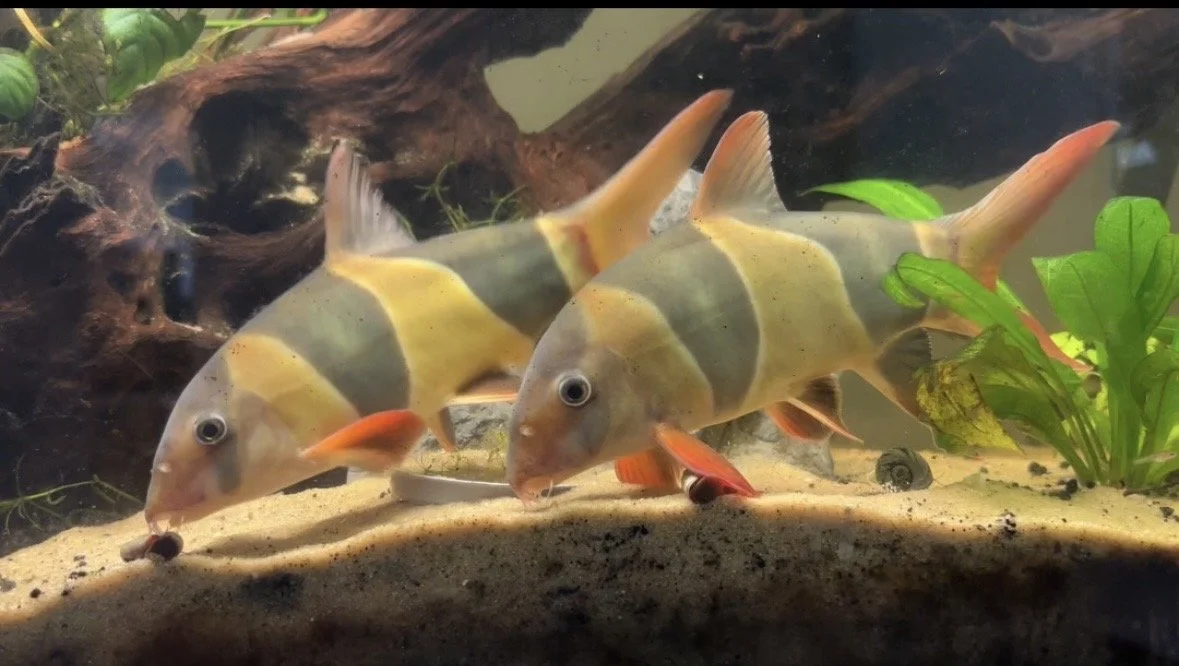
Clown loaches in my 45-gallon tank
Regular water changes help bring the tanks back toward the chemistry of my source water while also removing accumulated waste and other dissolved substances. Because I know the parameters of the water going in, my tap water provides a relatively consistent baseline without requiring me to purchase, produce, or remineralize RO water.
My tap water isn't perfect. A KH of 2 provides relatively little buffering capacity, and I've noticed that the pH in these tanks tends to gradually drift downward over time. To compensate, I periodically add crushed coral, which slowly dissolves and adds carbonate and minerals to the water. Even with this small adjustment, I consider my tap water well suited for both tanks—and switching to RO water would add complexity without solving a significant problem. Through water changes and adding crushed coral, my 45-gallon and 10-gallon tanks maintain a GH of 10-13 and a KH of 3-4.
Why I Use RO Water in my Smaller Tanks
A few months ago, I made the switch to using RO water in my 5-gallon and 2.5-gallon tanks after testing their water and finding that the GH had climbed to between 16 and 20. This was considerably higher than my tap water, which has a GH of around 7.
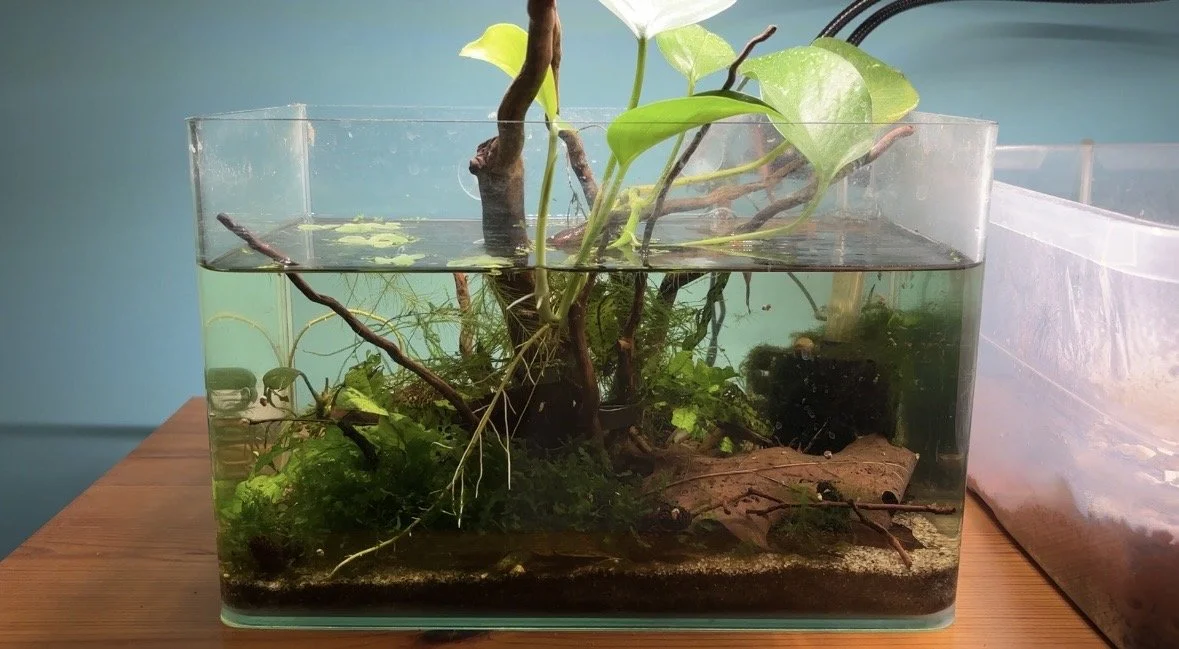
My 2.5-gallon tank
The likely culprit was how I was topping off these tanks. Unlike my larger aquariums, I perform water changes relatively infrequently in these low-bioload setups and was primarily replacing evaporated water with tap water. When aquarium water evaporates, the water leaves but the dissolved minerals remain behind. Repeatedly topping off with tap water introduces additional calcium, magnesium, and other dissolved substances without removing what was already in the tank. Over time, this can cause the mineral concentration—and therefore GH—to gradually increase.
This became relevant because I wanted to keep Neocaridina shrimp in these tanks. Rather than continuing to add minerals every time I replaced evaporated water, I began using RO water for top-offs and incorporated water changes to gradually bring the hardness down. Since making the switch, the GH in both tanks has fallen below 12.
This doesn't mean RO water is better for small aquariums. In my case, it solves a specific problem: my infrequent water-change schedule combined with tap-water top-offs was allowing minerals to accumulate over time. Using RO water for top-offs allows me to replace the water lost to evaporation without continually adding more dissolved minerals.
Tap Water vs RO Water: Top-Offs and Water Changes
For regular water changes, I recommend using conditioned tap water if your tap water has suitable parameters for your tank. If your tap water is too hard, you can mix it with RO water to lower the GH and KH or use RO water and remineralize it to your desired parameters.
Top-offs are a little different. When water evaporates, the dissolved minerals stay behind. Topping off repeatedly with tap water adds additional minerals and can gradually increase your tank's hardness. Using RO water for top-offs avoids adding those extra minerals. This is why I use RO water for top-offs in my smaller tanks, even though I continue to use tap water for water changes in my larger tanks.
Which Should You Use?
Ultimately, there is no single best choice between tap and RO water. Start by testing the GH and KH of your tap water and comparing those parameters with the needs of the fish and invertebrates you keep. If your tap water is already suitable, conditioned tap water is usually the easiest and most affordable option. If your tap water is too hard or you need more control over your water chemistry, RO water can be a useful tool. For top-offs, RO water can also help prevent minerals from gradually accumulating as water evaporates. The goal isn't to have perfect water chemistry, it's to maintain stable water parameters that are appropriate for your aquarium.
Tap or RO Water? Quick Checklist
Use Tap Water If:
Your tap water's GH and KH are suitable for your livestock or require only minor modifications.
Your tank's water parameters remain stable.
You perform regular water changes.
Consider RO Water If:
Your tap water is too hard for your livestock.
Your tank's GH is increasing over time.
You need more control over GH and KH.
You're primarily topping off water lost to evaporation.
When in doubt, test your tap water first. If the parameters already work for your aquarium, there's probably no reason to switch to RO. And while there are recommended ranges of GH and KH for different species, it’s not an exact science. If your fish and plants are thriving, there’s no need to make major changes. Stability matters more than being in the “perfect” water chemistry range.
