This post documents the slow shift of a mature aquarium ecosystem over a decade and my attempt to understand what changed.
Background on my Tank
My 45-gallon tank is over a decade old. The plant stock right now includes guppy grass, jungle val, Anubias, water wisteria, Amazon swords, dwarf water lettuce, frogbit, and unfortunately, duckweed. The fish stock includes two clown loaches, a bristlenose pleco, a Siamese algae eater, an upside-down catfish, and a bunch of guppies. It’s a really weird (and not ideal) stock because I got most of these fish between 7–10 years ago, not knowing any better. Despite this, the fish have thrived in my tank, and I maintain good water quality overall (only nitrates tend to run high).
The issue that has persisted for almost five years is poor plant growth. The problem began when I left for college and my parents took over maintenance. They did a great job, but whenever I came back over the summer, I couldn’t figure out what was causing the decline.
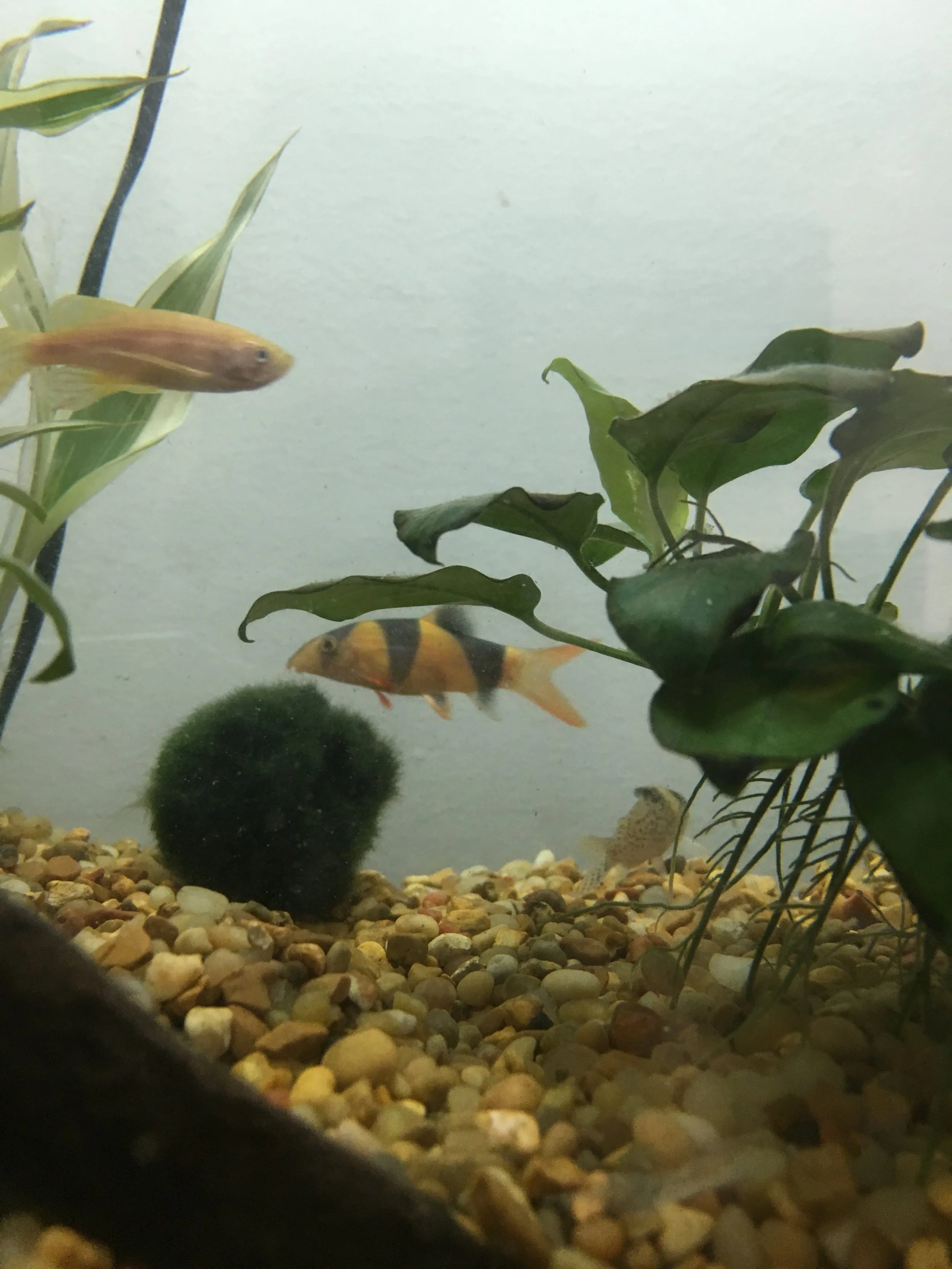
One of my clown loaches in January 2016. You can also see a panda cory cat and a danio.
A Tank That Used to Thrive
Poor plant growth wasn’t always an issue. While the tank was never a lush jungle of plants, the beginner species I stocked (like Anubias and Java fern) used to be healthy and abundant during the first 5–6 years. The setup was also pretty simple: a hang-on-the-back (HOB) filter, standard heater, mid-quality light, gravel substrate, and no root tabs, fertilizers, or CO2 injection. Fish stock changed over the years, but I had clown loaches, a pleco, an upside-down catfish, corydoras, danios, and other beginner-friendly fish. It was a very standard low-tech tropical community tank with solid plant growth. I did water changes roughly every two weeks, and maintenance was relatively low. The tank felt balanced.
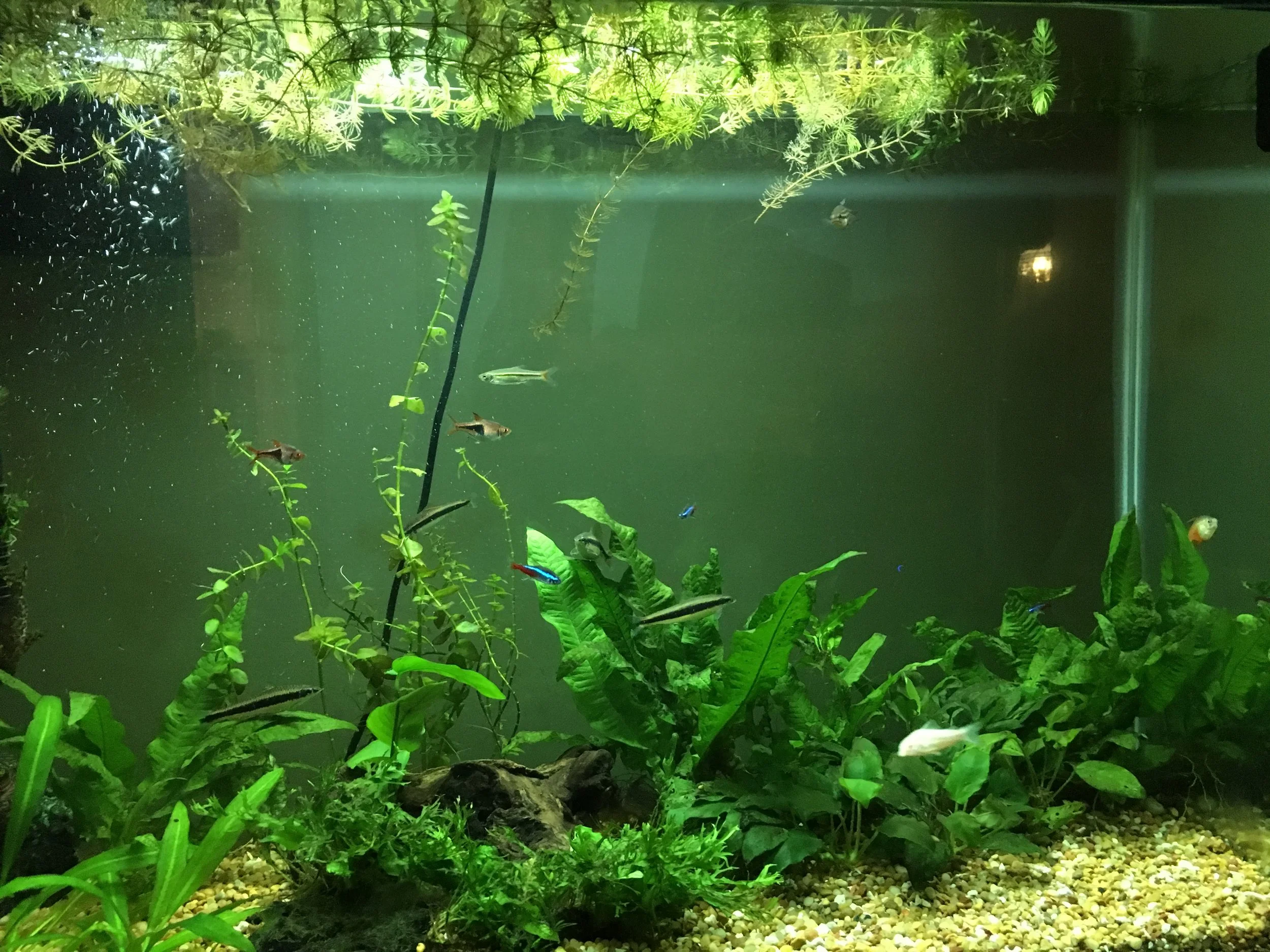
My tank in August 2018. Java fern, ludwigia, amazon swords, and anubias all thrived.
The Beginning of the Decline
The plant growth didn’t suddenly stop; it was more of a gradual decline. The clown loaches got bigger (and more destructive), digging up anything with a weak root system. They also produce a lot of waste and constantly stir it into the water column. Anubias and Java fern became coated in algae and mulm, slowing growth and causing leaves to melt over time. I lowered the light intensity to try to reduce algae, but that also slowed plant growth in a tank that is already very tall, reducing light penetration to the bottom.
The exception to the problem was floating plants like dwarf water lettuce, frogbit, and duckweed. They avoided many of the light penetration and algae issues affecting plants lower in the tank, and growth exploded. I constantly had to remove them, and they further reduced the amount of light reaching the bottom of the tank. Floating plants would also get pushed under one another, die, and become mulm. Their roots would catch suspended debris and cause it to settle onto plant leaves below.
When I introduced guppies, they reproduced rapidly, which further increased the bioload and mulm accumulation. The result was an imbalance in my tank: reduced light penetration to the bottom, excessive debris and mulm accumulation on plant leaves, and elevated nitrates.
A Tank Out of Balance
Over time, the tank began to look barren. Anubias leaves became coated in mulm and brown algae. Java fern leaves melted away. Jungle val barely survived and stopped producing new shoots. Guppy grass and moss became coated in debris. Meanwhile, floating plants grew so aggressively that they formed a carpet across the water surface.
I wanted to add riparian plants that could grow above the waterline, so I introduced pothos. There was a clear pattern emerging: heavy plant growth on top (floaters and riparian plants), stagnant growth and plant death on the bottom (Amazon swords, Anubias, Java fern). It became frustrating that even “beginner” plants were struggling in my tank.
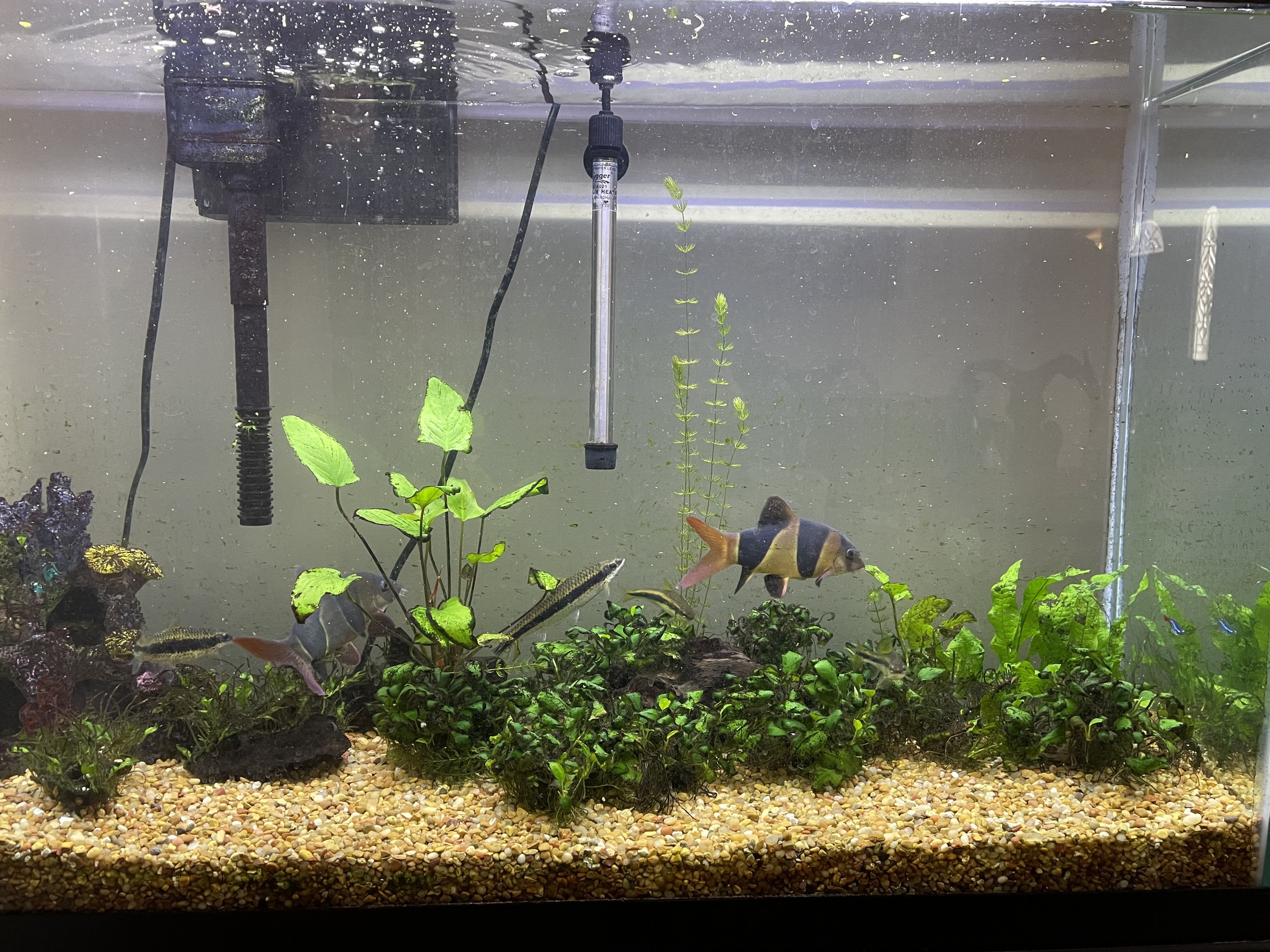
My tank in January 2022. I believe high nitrates due to excessive bio load was causing the algae on my plants.
Attempts to Diagnose the Issue
Over the years, I made many changes to try to address the issue. I upgraded to a FluvalSmart light to increase light intensity. I cleaned the glass lid to improve light penetration and eventually removed the lid entirely so the light could sit directly above the tank. I dosed fertilizers (all-in-one, iron, potassium, liquid carbon), assuming a nutrient deficiency was the problem. I checked GH and KH, considering the possibility of nutrient lockout. I changed the substrate from gravel to sand with root tabs to improve root growth (and because I knew the clown loaches would prefer it). I increased water changes to reduce nitrate accumulation, cleaned the filter more frequently to reduce mulm buildup, and used plant weights and string to secure plants to driftwood or keep them rooted in the sand.
The plants continued to struggle.
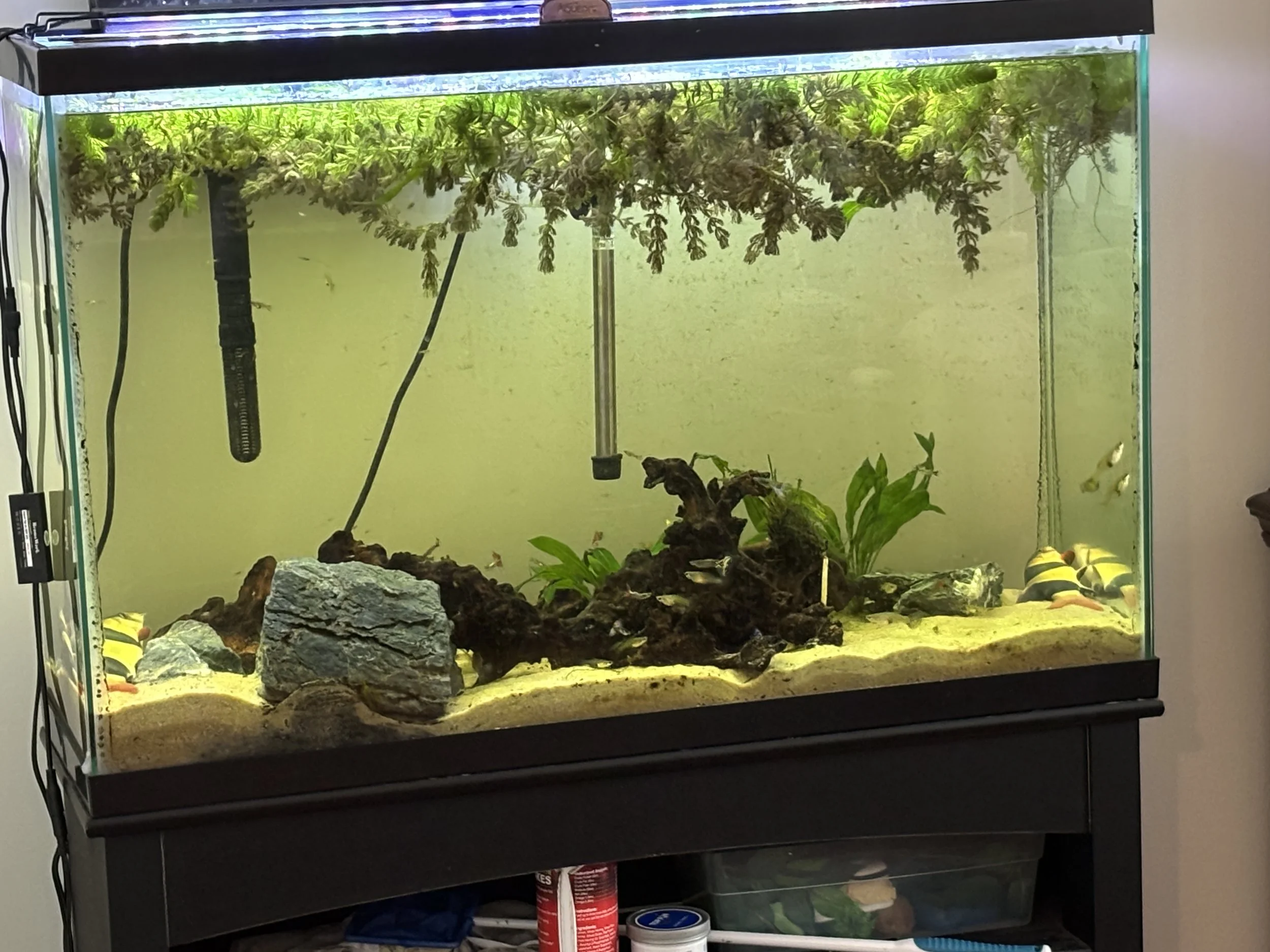
My tank in February 2025. At this time, hornwort was dominating the water surface but plants below struggled.
Rethinking the Problem
After many rounds of research and failed attempts to fix the issue, I realized that my problem probably wasn’t one of the mainstream issues: light, nutrients, or lack of CO2. I had known for a while about the buildup of mulm, but I always assumed it was natural and not a major issue since I vacuumed a decent amount during water changes. I figured everyone dealt with it.
Eventually, I realized the mulm accumulation was not nearly as significant during the early years of the tank. When I had gravel substrate, debris would sink into the gravel and could be vacuumed out more easily. When I switched to sand, the problem became much more noticeable because mulm sat directly on top of the substrate. However, the plant decline started before the substrate switch, so sand alone wasn’t the root cause.
Some mulm buildup is natural and even beneficial in aquariums, but in my case it seemed to be accumulating faster than the system could process it.
I believe the bioload gradually increased over the years, and the cycle of floating plants growing rapidly and dying contributed heavily to the problem. Then I considered another issue: only the left side of the tank had noticeable circulation, and most of that flow was near the surface. Circulation was especially poor in the bottom-right corner of the tank.
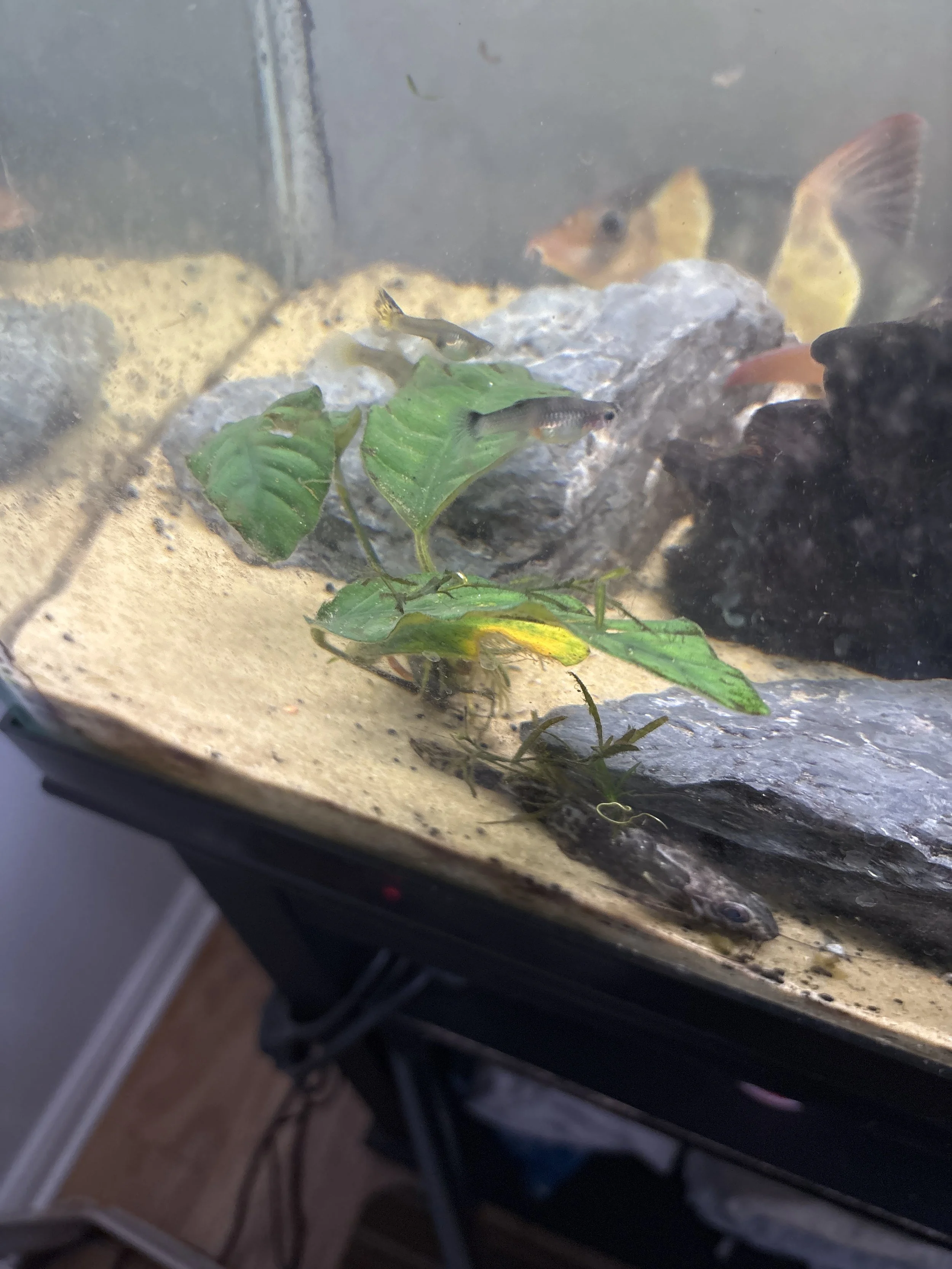
One of my Anubias plants in December 2025. Leaves have algae and there are holes.
Not only was circulation poor, but my HOB filter was overloaded. Even after a week, the filter sponge would become caked in mulm. I had slowly accepted that as normal when it probably wasn’t. Decaying plant matter would also clog the intake and further reduce circulation.
This led me to a new solution: I needed to aggressively reduce floating plant growth and significantly improve circulation and removal of suspended debris and waste.
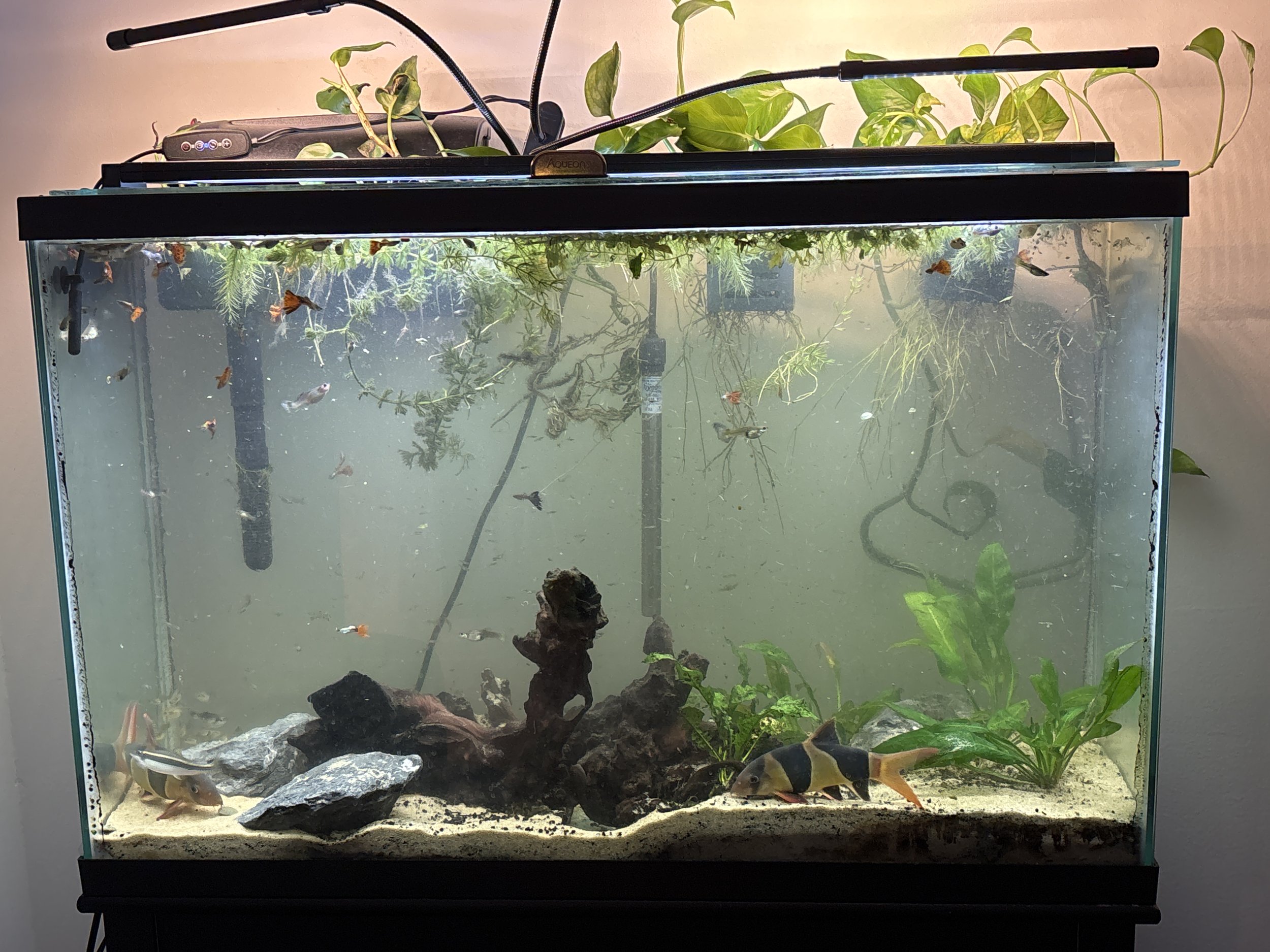
My tank in January 2026. Plants are surviving but not thriving. Floaters still dominating. Pothos was recently added.
A New Approach
The first step was being more proactive about removing floaters. Duckweed, water wisteria, frogbit, and dwarf water lettuce grow aggressively in this tank and need to be removed regularly. My new rule is to limit floating plant cover to roughly 30% of the water surface.
The second major change was installing a canister filter. This was my first time using one—they are more expensive and more complicated to install, and I was worried about potential leaks. I decided not to go with a budget option and purchased an Oase Biomaster Thermo 250 canister filter. It also functions as a heater and can eventually replace both my HOB filter and standalone heater.
The setup process wasn’t too difficult and took about 45 minutes. The tubing and fittings seem very secure so far, and I haven’t had any leaking issues. For now, I kept the HOB filter running on the left side (though the goal is to eventually remove it) and installed the canister intake on the right side of the tank. I used the spray bar for the output and positioned it near the back center. Now I have filtration pulling water from both sides of the aquarium, which should improve circulation and waste removal.
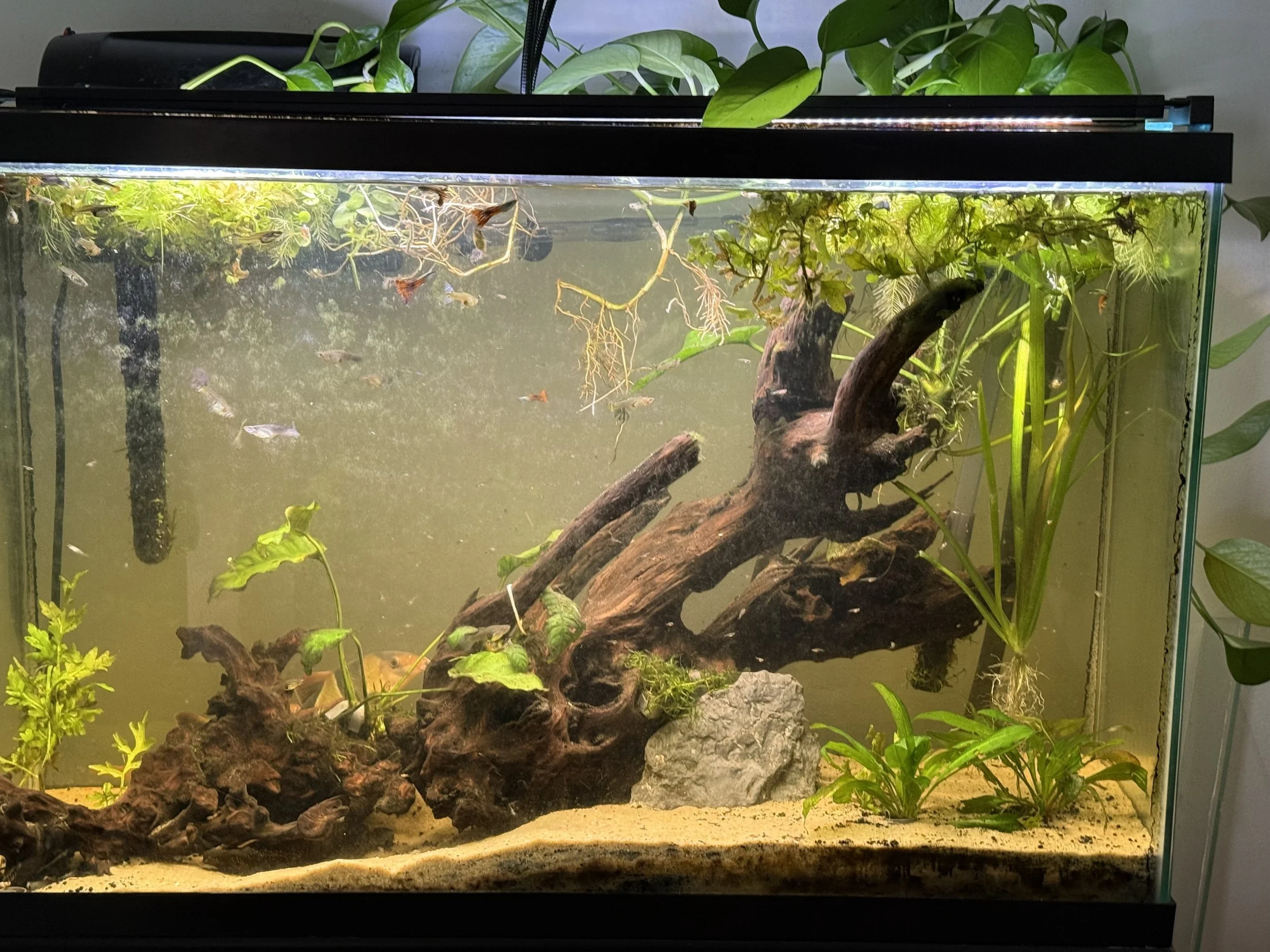
My tank the morning after installing the canister filter in May 2026. Removed 70% of floaters as well.
What I expect Moving Forward
Over the next few weeks, I’ll be watching for improved circulation and less mulm accumulation on plant leaves. With increased filtration, I hope algae becomes less aggressive, especially on plant surfaces. I’ll also be watching for new healthy leaves, improved growth, and whether the tank simply starts looking cleaner overall.
It has only been two days since I installed the new filter, so I’ll be providing updates as the tank responds.
