Fishkeeping for Renters: Keeping Aquariums When You Move
A guide to keeping aquariums when you're renting, moving frequently, or simply not ready to settle down.
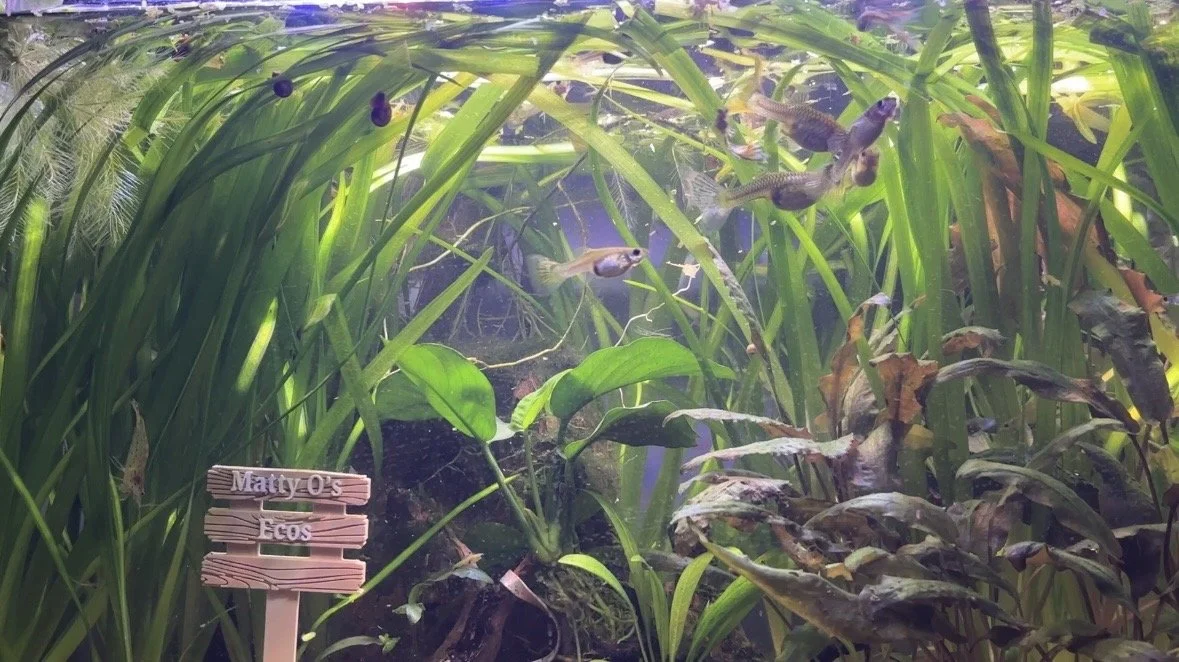
Fishkeeping is an increasingly popular hobby, but for many people, it can be difficult to get into seriously. Not only can it become a sinkhole for your money as you buy more and more products, but some of the most interesting setups can feel somewhat permanent. Most fishkeepers dread the idea of moving and having to dismantle their setups and take them on the road. You’ve probably seen people on social media with incredible aquariums and thought, “I’d love to build something like this, but how could I when I might move in the next few years?” That can be enough to discourage someone from getting into the hobby at all. But you shouldn’t have to choose between staying flexible with your living situation and taking part in this fascinating hobby. If you’re in a temporary housing situation—renting, in college, living with family, expecting to relocate, or simply not sure where you’ll be in a few years—this post is for you.
An aquarium can be surprisingly simple. Complex setups you see on social media can involve large filtration systems, heaters, carbon dioxide injection, high-tech lighting, and plenty of other equipment. My advice is to keep it simple. There are some awesome setups that require little more than the basics: a tank, a simple filter, a light, a heater depending on the livestock, and your substrate, hardscape, and plants. Of course, you’ll need a few smaller supplies as well, such as food, dechlorinator, a net, a siphon, and a test kit. If portability is a priority, I’d make it a goal to keep your setup simple enough that all of these smaller supplies can fit into a single tote or bucket.
One of the most important considerations for someone who moves often is tank size. A recurring theme in fishkeeping—and plenty of other hobbies—is the idea that the scale of your setup is directly proportional to how impressive it is. But I believe fishkeeping is really about balancing and observing an ecosystem, and that can be done at almost any scale. Even in a small aquarium, you can observe shrimp carrying eggs, fish establishing territories, snails reproducing, schooling behavior, and plants sending out runners. You’ll learn about water chemistry, water changes, the nitrogen cycle, and balancing light and nutrients to manage algae and plant growth. Nano tanks are absolutely possible, although they can become less forgiving as water volume decreases. On the other end, tanks around 20 gallons and larger start becoming considerably more cumbersome to move once you account for the tank itself, stand, substrate, hardscape, and equipment. For someone who expects to relocate, I think the sweet spot is around 5–15 gallons: small enough to remain manageable while still offering plenty of room to create an interesting ecosystem.
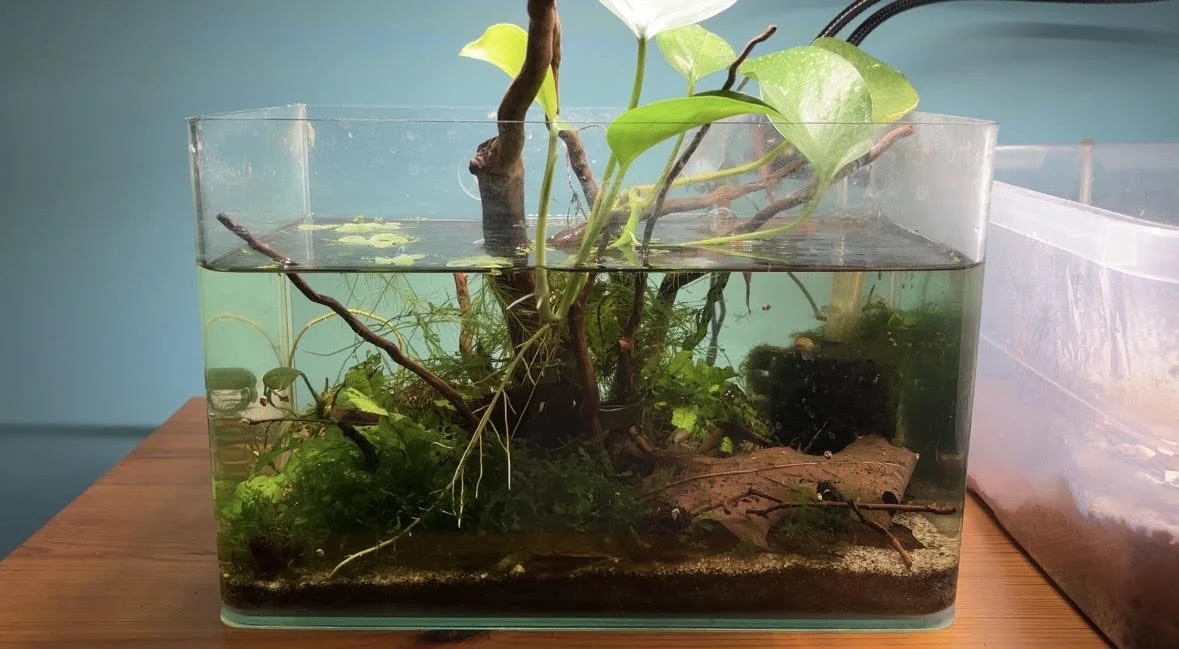
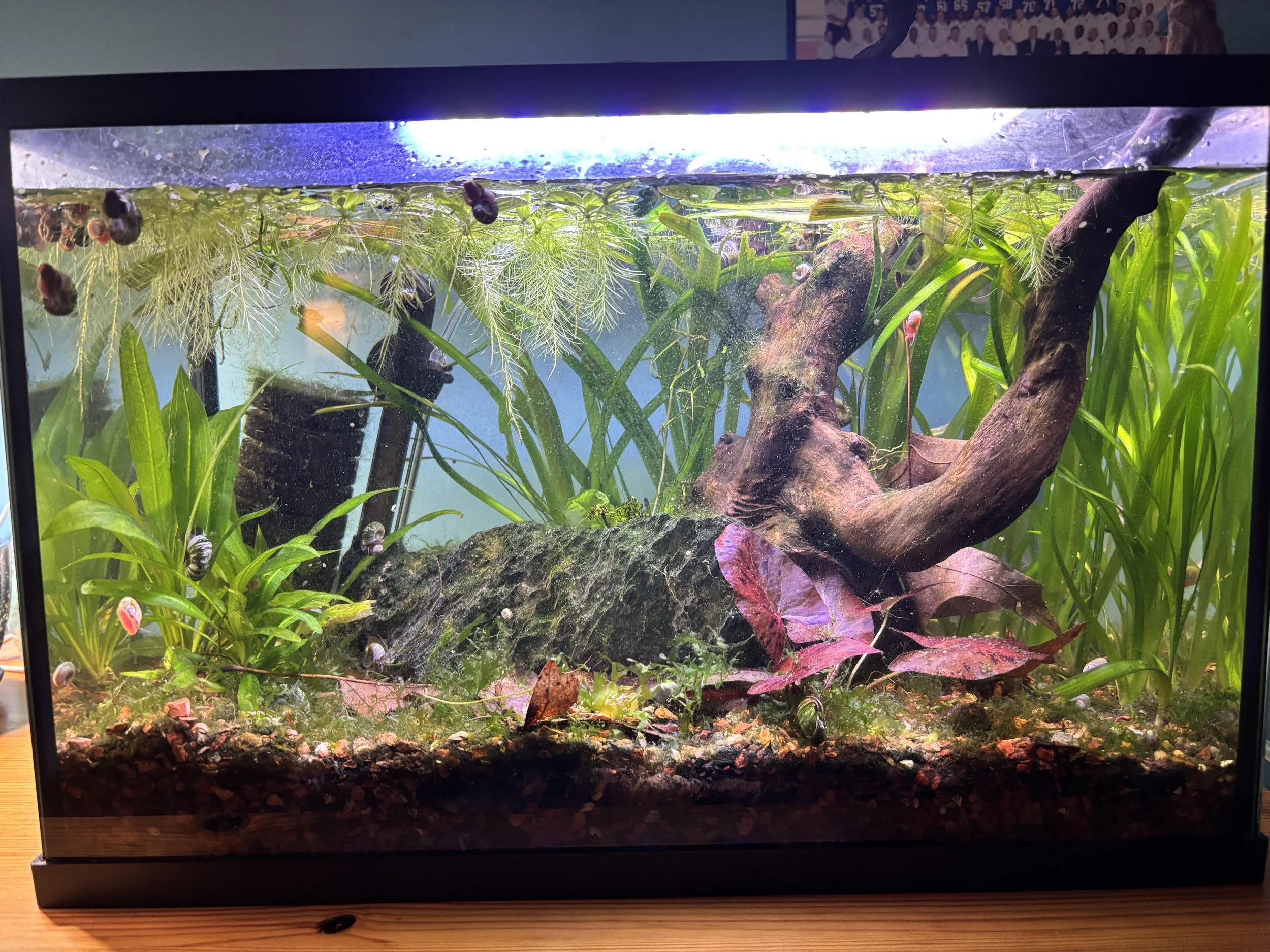
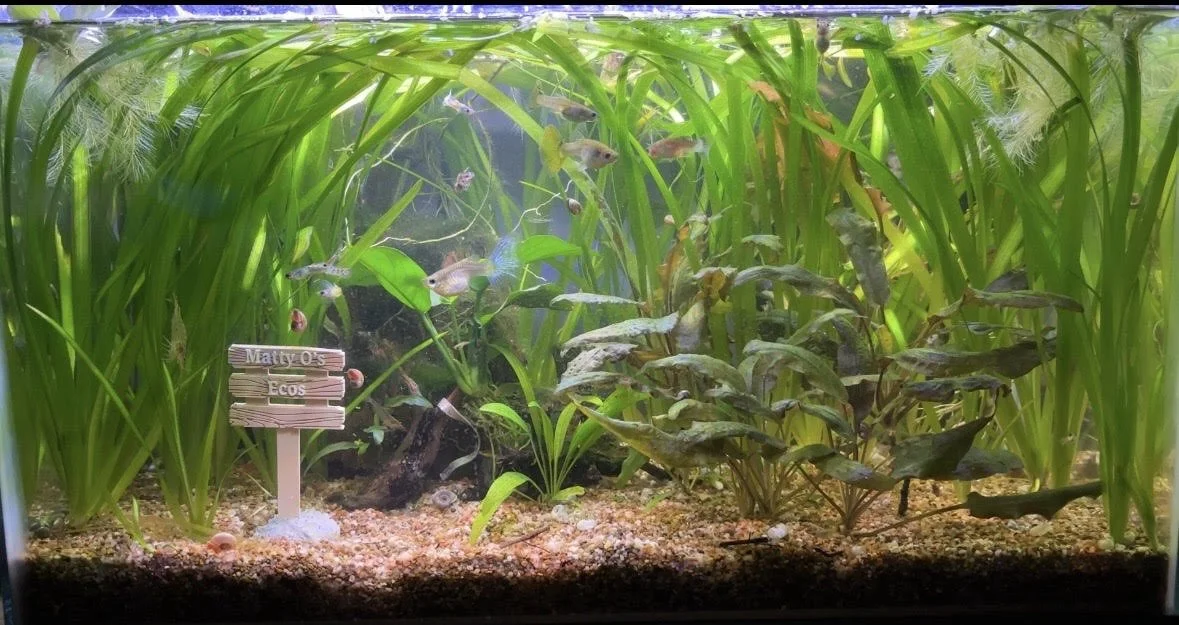
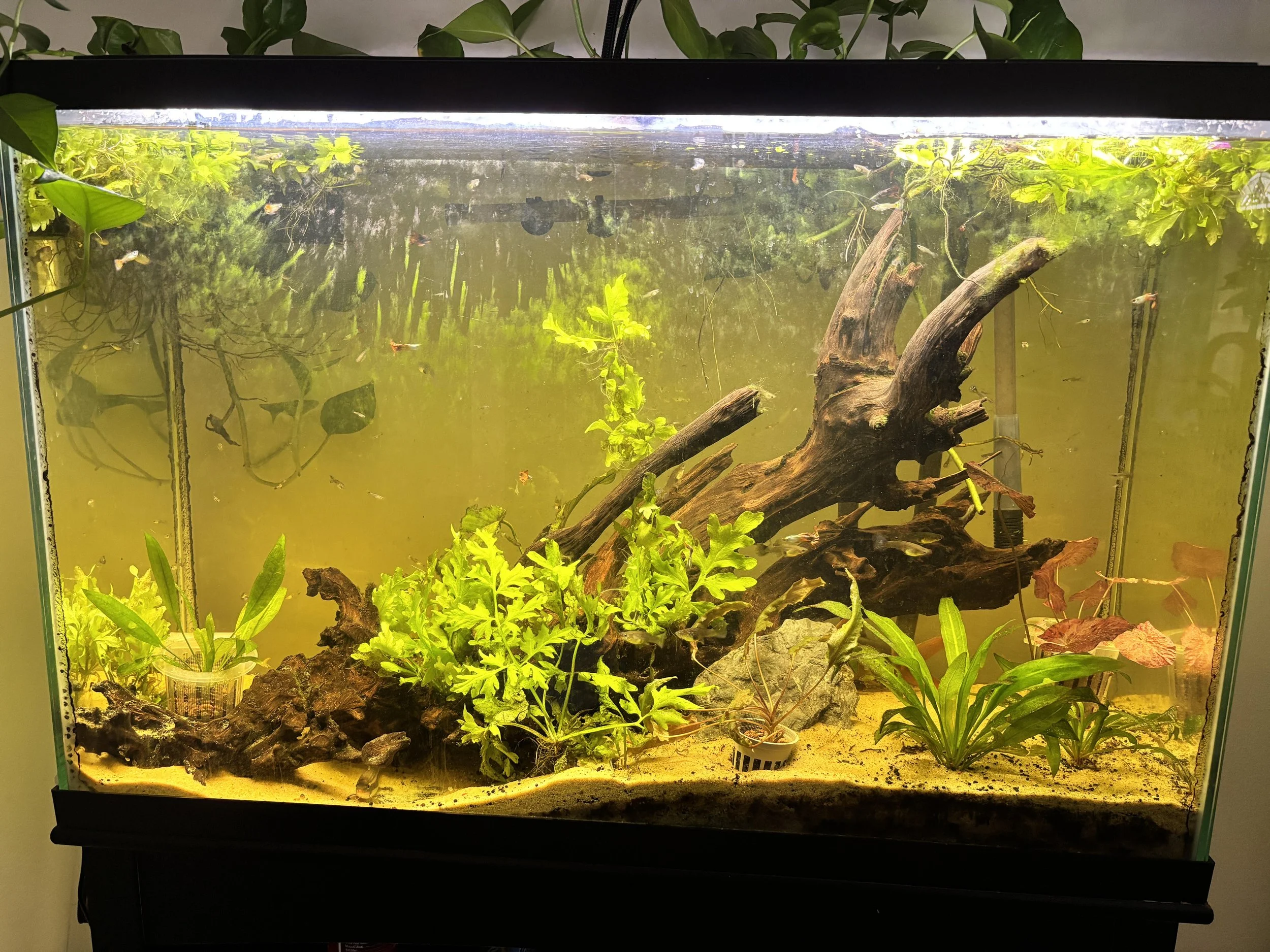
he hardest part of breaking into any new hobby is actually starting, so I’ll give three concrete example setups for inspiration. The first is a 15-gallon planted community tank. Besides the tank itself, you’d want a bag of fine sand and some root tabs for substrate, a small hang-on-back (HOB) filter, a heater, and an LED light. To make the tank feel like a true ecosystem, I highly recommend adding some easy live plants, such as Vallisneria, Cryptocoryne, Amazon swords, Anubias varieties, and Java fern. Rocks and driftwood can also be used to create a more natural-looking environment and provide structure for the tank’s inhabitants.
And, of course, there are the inhabitants. There are countless possibilities, but one of my favorite approaches is combining a centerpiece fish, a group of schooling fish, and some invertebrates or bottom dwellers. For example, a honey gourami, 8–10 neon tetras, and five Amano shrimp would create a well-stocked tank with a ton of interesting behavior to observe in a relatively small ecosystem. You could watch the honey gourami explore its surroundings using its antenna-like pelvic fins, the tetras interact and school together, and the shrimp constantly pick at algae and biofilm on plants, rocks, and driftwood. At feeding time, you might even watch the Amano shrimp scavenge food that makes its way past the fish and reaches the bottom. Despite taking up relatively little space in your home, there would almost always be something happening inside the tank.
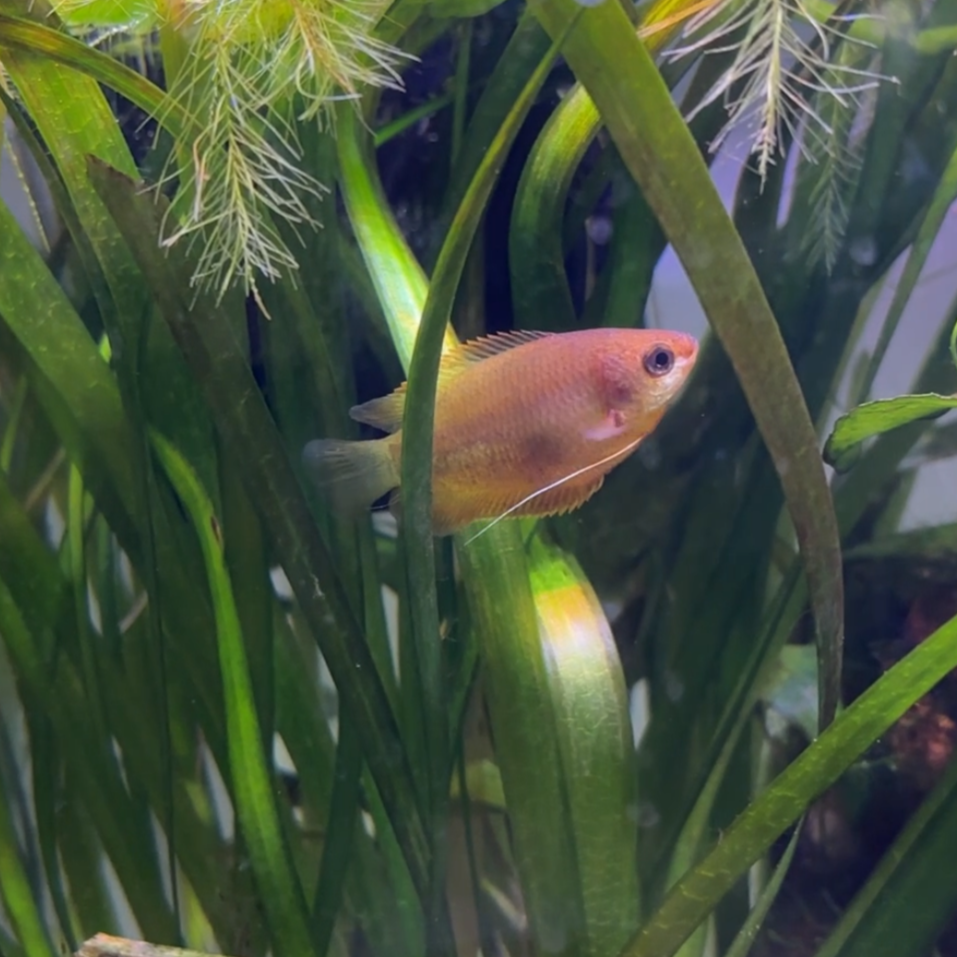
Honey Gourami
A second example is a 5-gallon Neocaridina shrimp tank. Similar to the 15-gallon example, I’d recommend heavily planting this tank. The main equipment change I would make is using a sponge filter rather than a hang-on-back filter. When the shrimp reproduce, the newly hatched shrimplets are incredibly small, and a sponge filter eliminates the risk of them being pulled into a filter intake. Allowing some algae and biofilm to develop is also beneficial, as shrimp will spend much of their day grazing on these surfaces.
Because Neocaridina rely on minerals in the water to build their exoskeletons and molt successfully, it’s also worth periodically testing your water’s general hardness (GH) and keeping conditions stable. Despite their tiny size, Neocaridina can be fascinating to observe. You can watch them constantly graze on biofilm, swarm around food, molt, and reproduce. Females will carry clusters of eggs underneath their bodies, tiny shrimplets will eventually begin appearing throughout the plants, and over time you can watch a small group develop into an entire colony. If you want to take the hobby even further, Neocaridina are available in numerous colors and can introduce you to selective breeding for particular traits. All of this can happen in a planted ecosystem that takes up very little space and can be relatively easily relocated when it’s time to move.
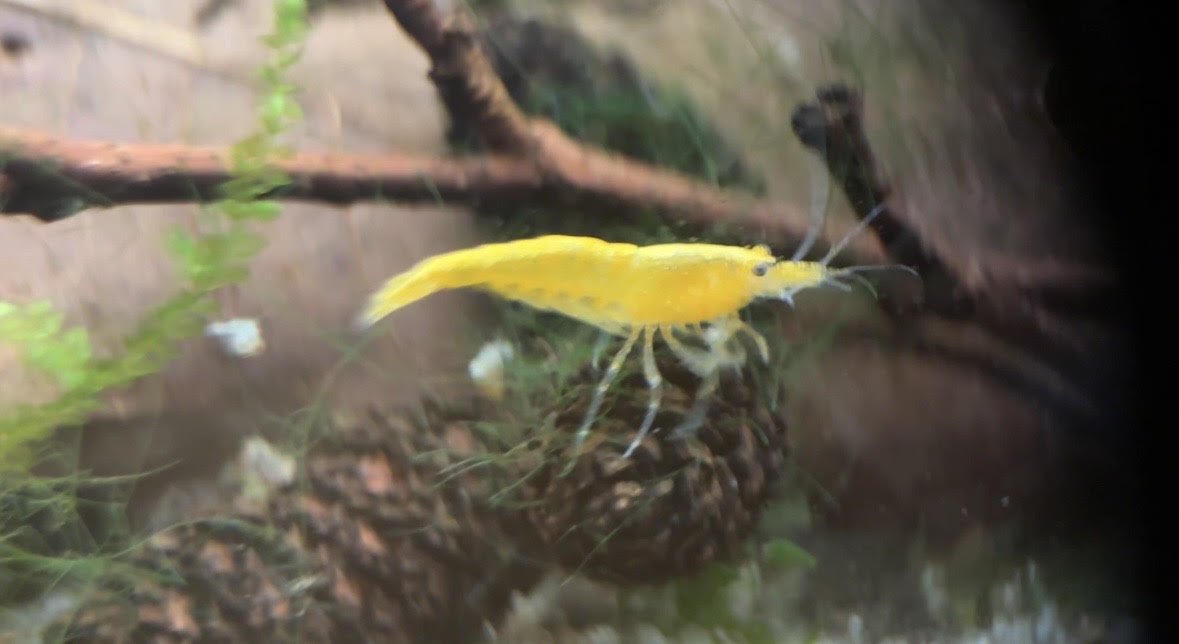
Yellow Goldenback Neocaridina Shrimp
For the final example, I’d recommend a 10-gallon planted tank with sparkling gouramis and a mystery snail. Sparkling gouramis are tiny fish that work especially well in heavily planted tanks, where plants and hardscape provide cover and break up lines of sight. One of the coolest things about this species is that they can actually produce audible croaking or clicking sounds during social interactions. You can also watch them explore the tank, interact with one another, establish territories, and potentially display courtship behavior. A mystery snail adds a completely different type of activity to the tank. Despite being a snail, they can be surprisingly entertaining to watch as they climb plants and hardscape, extend their breathing siphon at the surface, and occasionally let go of surfaces and float or fall back toward the bottom. This setup would require little more than a small filter, heater, light, substrate, and plenty of plants, but would give you two very unusual animals and a surprising amount of behavior to observe in only 10 gallons.
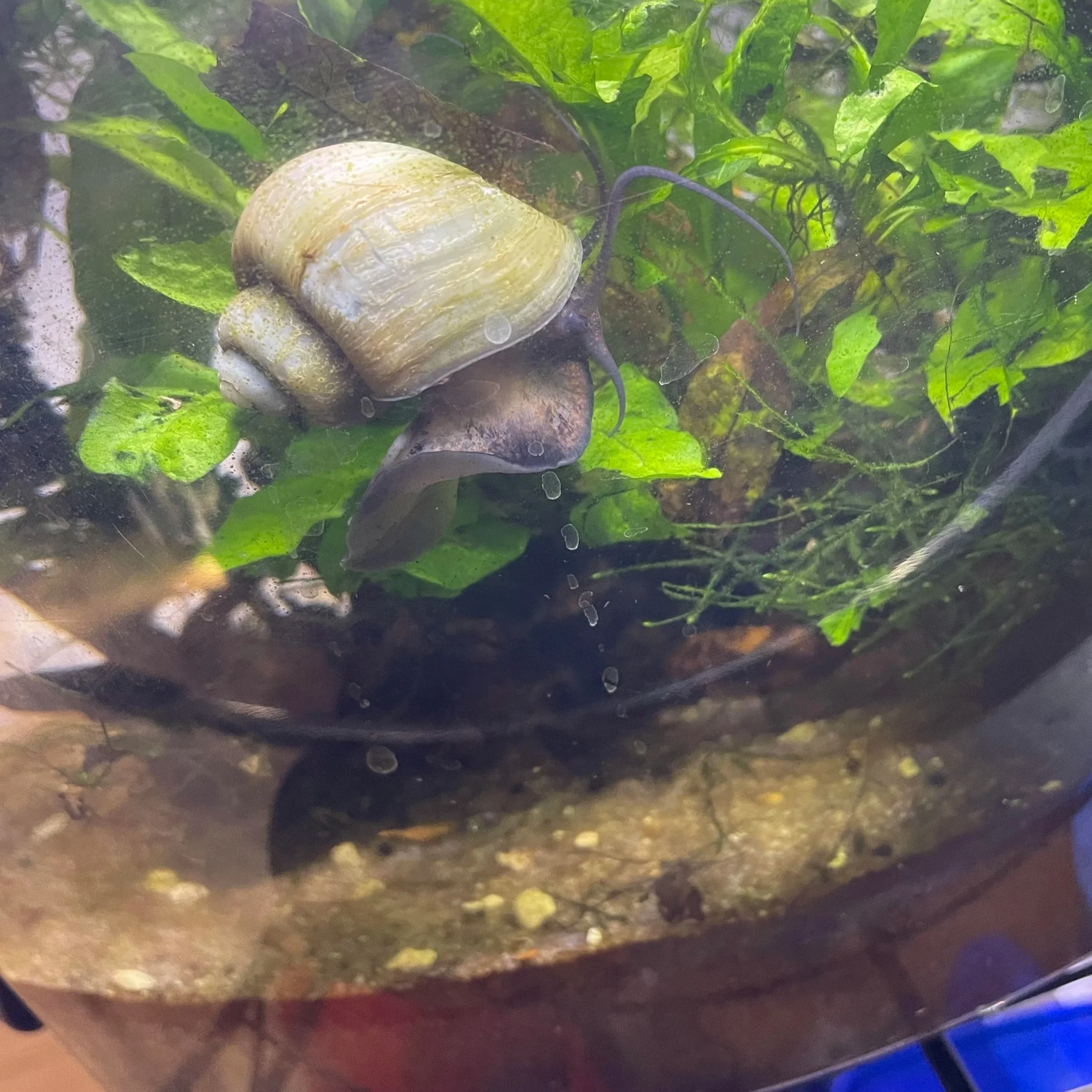
Mystery Snail
These are just three of the many aquarium setups that are practical to own even if your living situation isn’t permanent. I’m in this situation myself, having moved three times in the past four years. I currently have 2.5-, 5-, and 10-gallon tanks, plus a 45-gallon tank that stays at home. When I moved earlier this year, I was able to relocate all three of my smaller tanks, along with my 25-gallon vivarium, in a single trip. It took some planning—and an extra set of hands certainly helped—but it was far from the ordeal that moving multiple aquariums might sound like.
Fishkeeping doesn’t have to mean committing to a massive tank or waiting until you own a home. A small aquarium can still give you years of learning, interesting animal behavior, and a surprisingly complex ecosystem to observe and care for. Your dream 100-gallon setup can always come later. For now, build something that fits the life and space you have today. Don’t let a temporary living situation keep you from getting into one of the coolest hobbies out there.
