Carnivorous Plant Bog
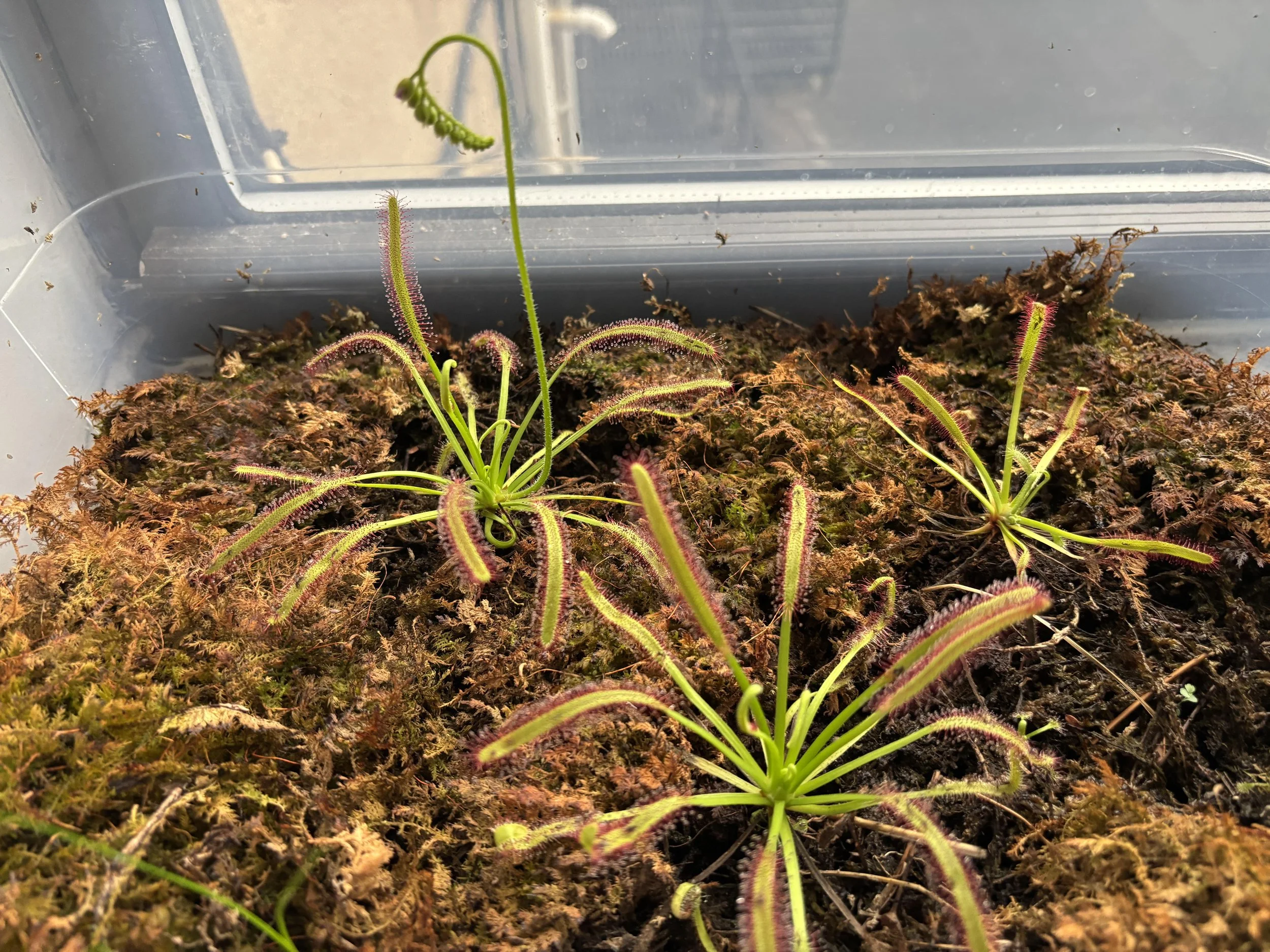
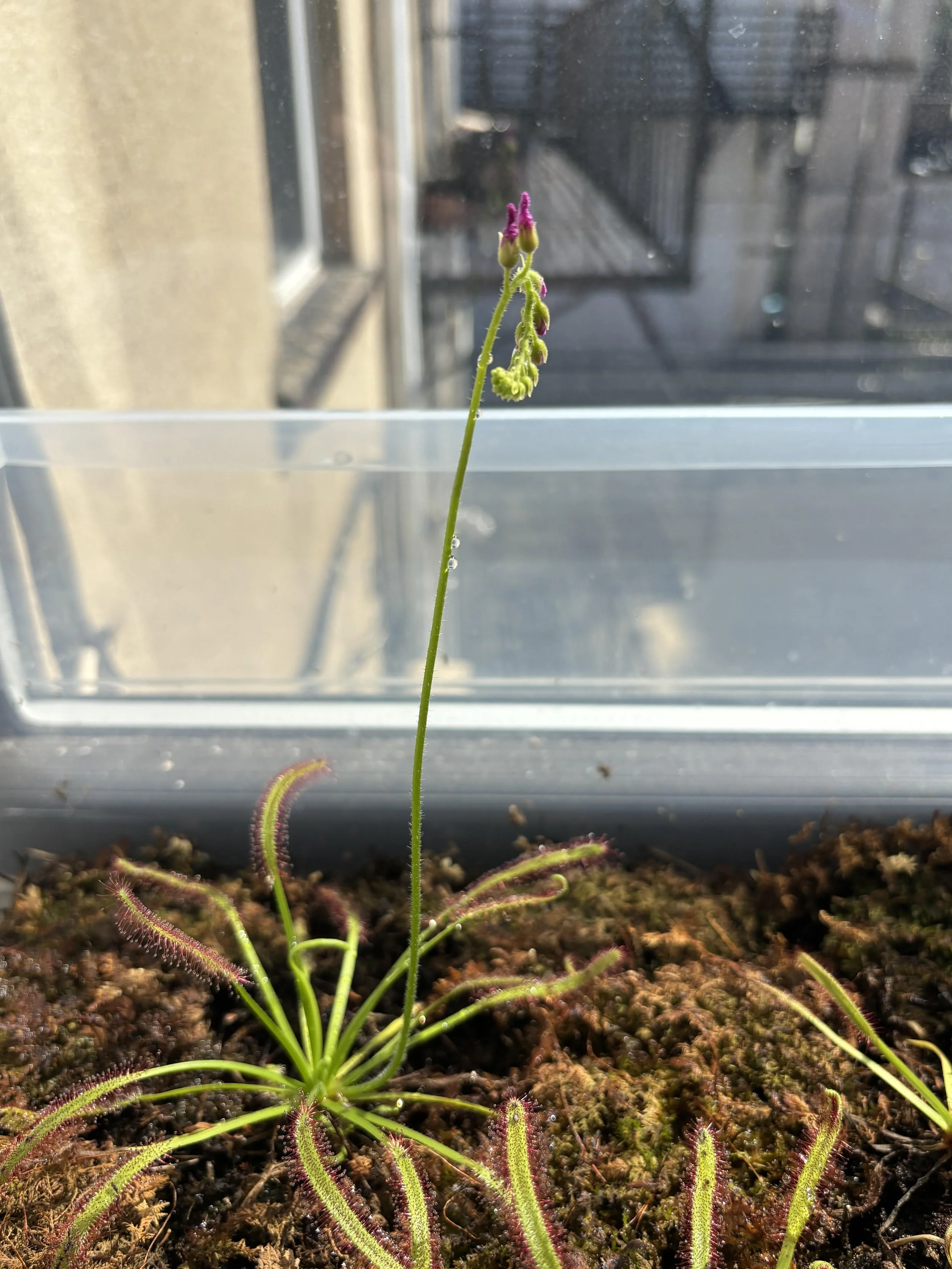
I started this carnivorous plant bog in March 2026 when I bought three cape sundews. These are my first carnivorous plants and I got them because it felt like an exciting project - the idea of plants consuming animals is a concept that always intrigued me. And I really wanted the fungus gnats around my house consumed. I set the sundews up in a plastic bin with dried sphagnum moss by my windowsill. I keep the bog consistently damp with reverse osmosis water. The plants have grown well and are propagating; one of them began flowering. It has been a success overall so far, and I am excited to purchase a second carnivorous plant species.
The Setup
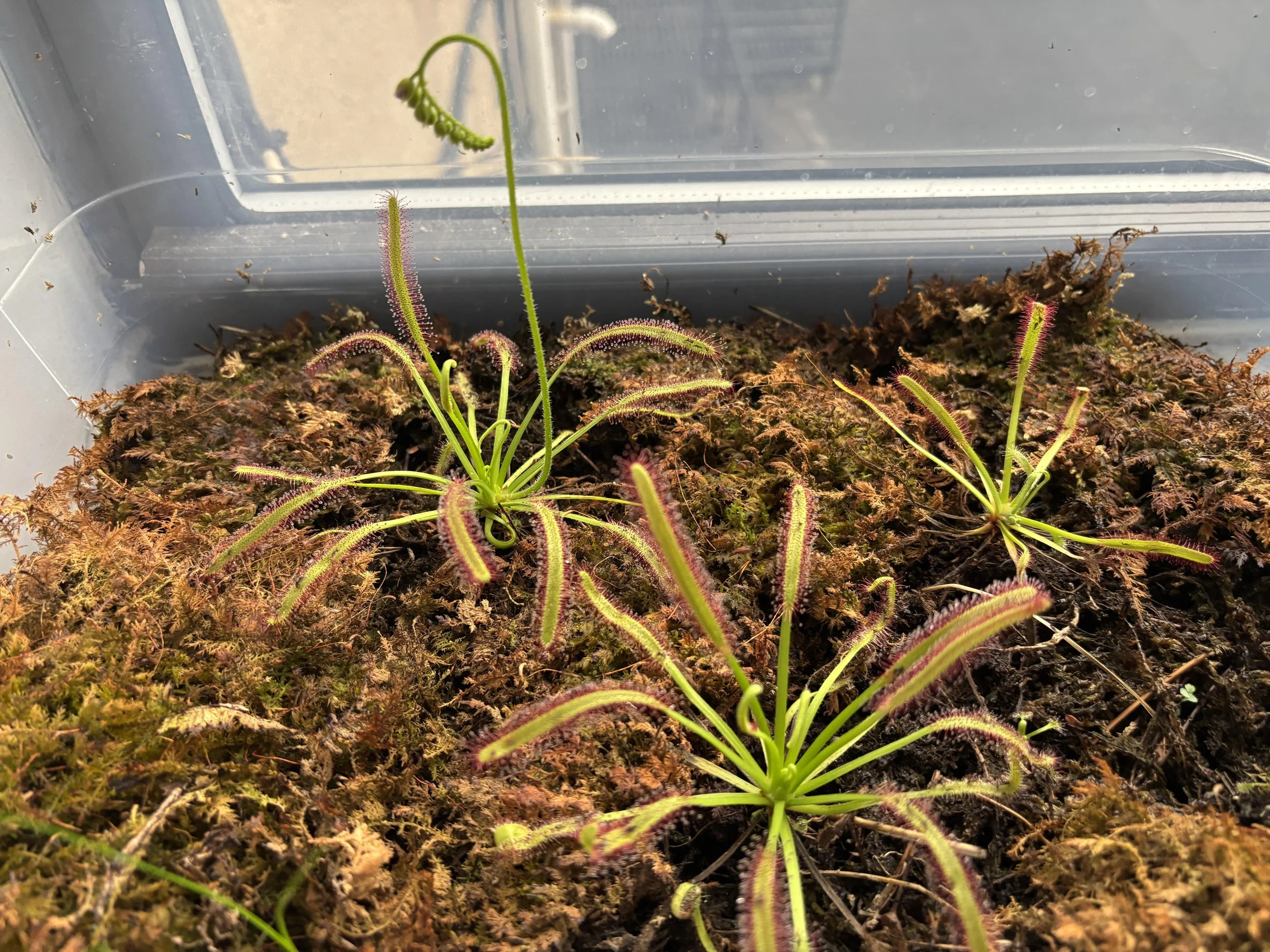
As a beginner to owning carnivorous plants, I wanted a simple setup. I started by using a plastic bin filled partway with long-fiber sphagnum moss. Reverse osmosis water was added until the moss was fully saturated, creating a shallow water reservoir at the bottom to maintain consistent moisture. Then I made small openings in the moss to plant the cape sundews. I placed the setup on a bright windowsill because I knew they need lots of light to thrive. Every couple of days, I’ll refill the bin with reverse osmosis water to maintain moisture, which is critical for their dew production.
Why This Setup Works
Cape sundews naturally grow in nutrient-poor, consistently moist environments, so this setup is designed to recreate those conditions as simply as possible. Reverse osmosis water is used because carnivorous plants are highly sensitive to minerals and dissolved solids commonly found in tap water. Long-fiber sphagnum moss helps retain moisture while still allowing airflow around the roots, making it a popular substrate choice for many carnivorous plant growers. The shallow standing water keeps the moss consistently damp, mimicking the wet bog conditions these plants prefer. Strong natural light from the windowsill also plays an important role in healthy growth and helps encourage the sticky dew production that sundews use to trap insects.
Current Status / Future Plans
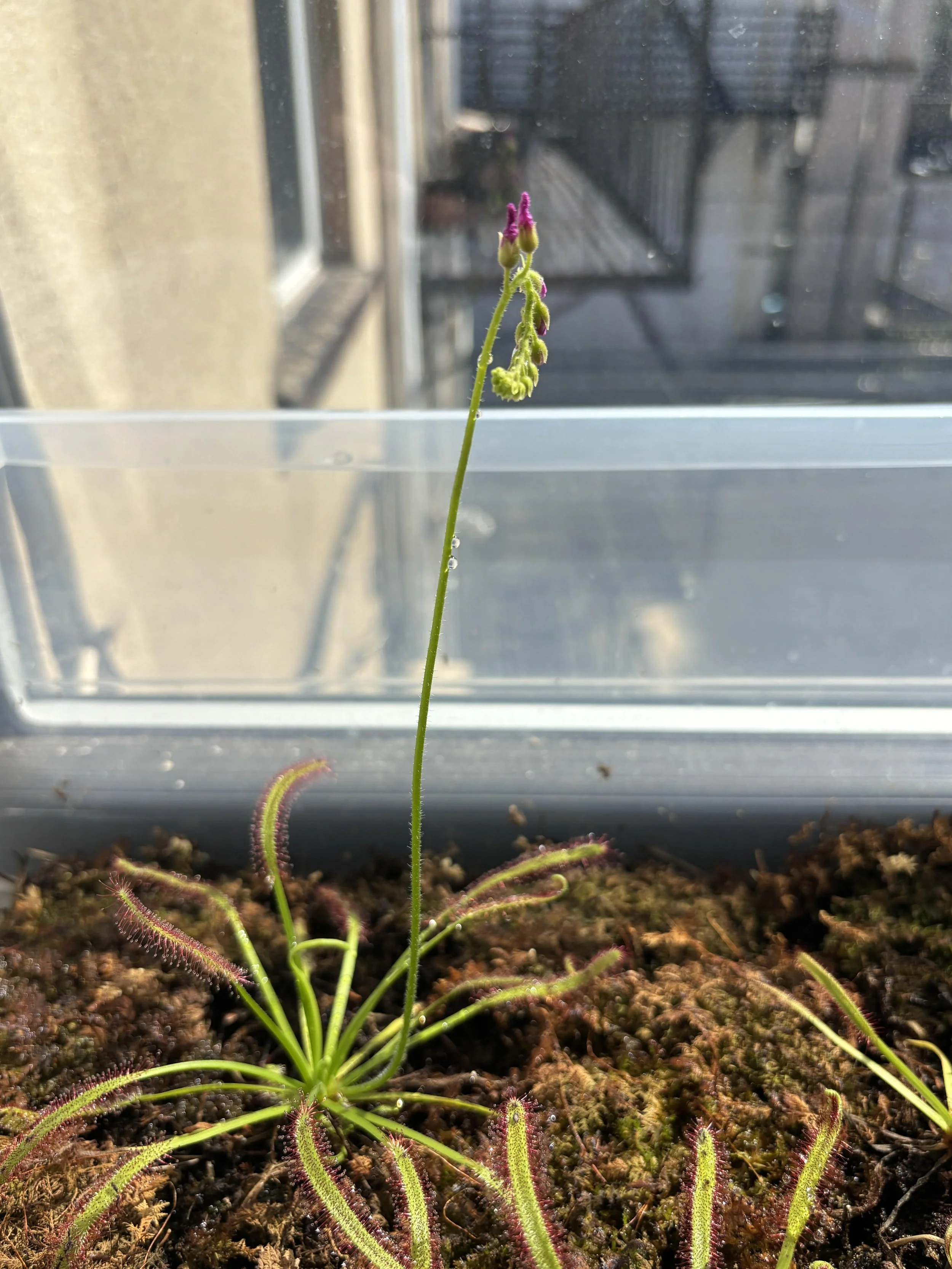
The cape sundews have adapted well to the setup and continue to produce new growth, including several baby sundews and the project’s first flower stalk. As the bog matures, I plan to expand into additional carnivorous plant species and experiment with more advanced setups, including larger containers, live moss growth, and potentially outdoor seasonal bog systems.