10-Gallon Guppy Tank
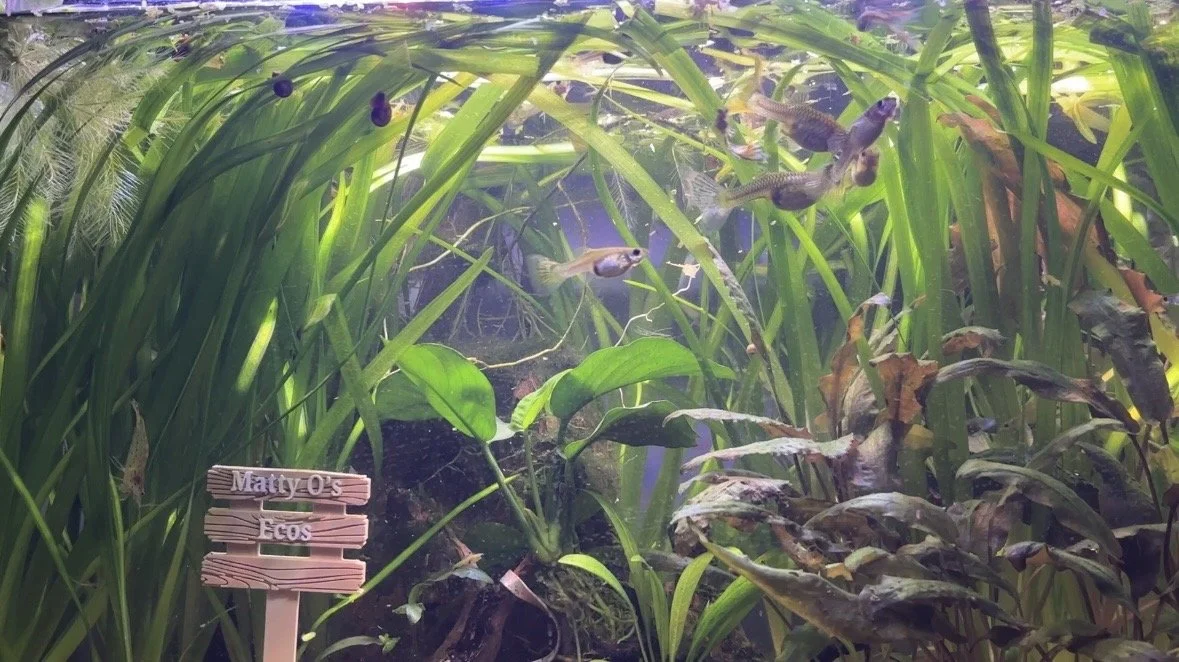
What began as a simple 10-gallon aquarium in 2023 gradually evolved into a densely planted, low-maintenance ecosystem focused on natural balance and long-term stability. Originally established using livestock transferred from one of my larger tanks, the system developed over time into a thriving environment shaped by heavy plant growth, biological filtration, and minimal intervention. The aquarium uses a hang-on-back filter filled with Seachem Matrix to provide additional surface area for beneficial bacteria, along with a sponge insert to trap physical debris and suspended waste. Submerged pothos roots help absorb excess nutrients and support water quality, while the dense vegetation provides structure, cover, and a more natural atmosphere throughout the tank. The system is designed to function with as little disruption as possible, with routine care generally limited to feeding, topping off evaporated water, and occasional monthly water changes.
The Inhabitants
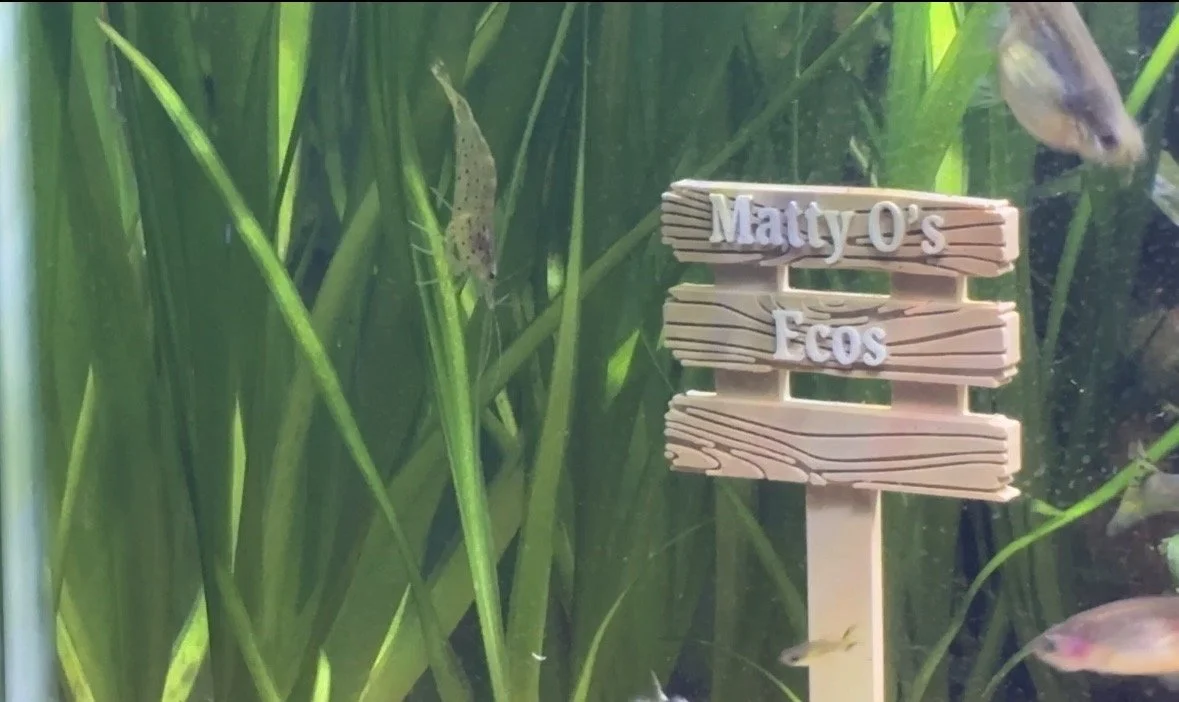
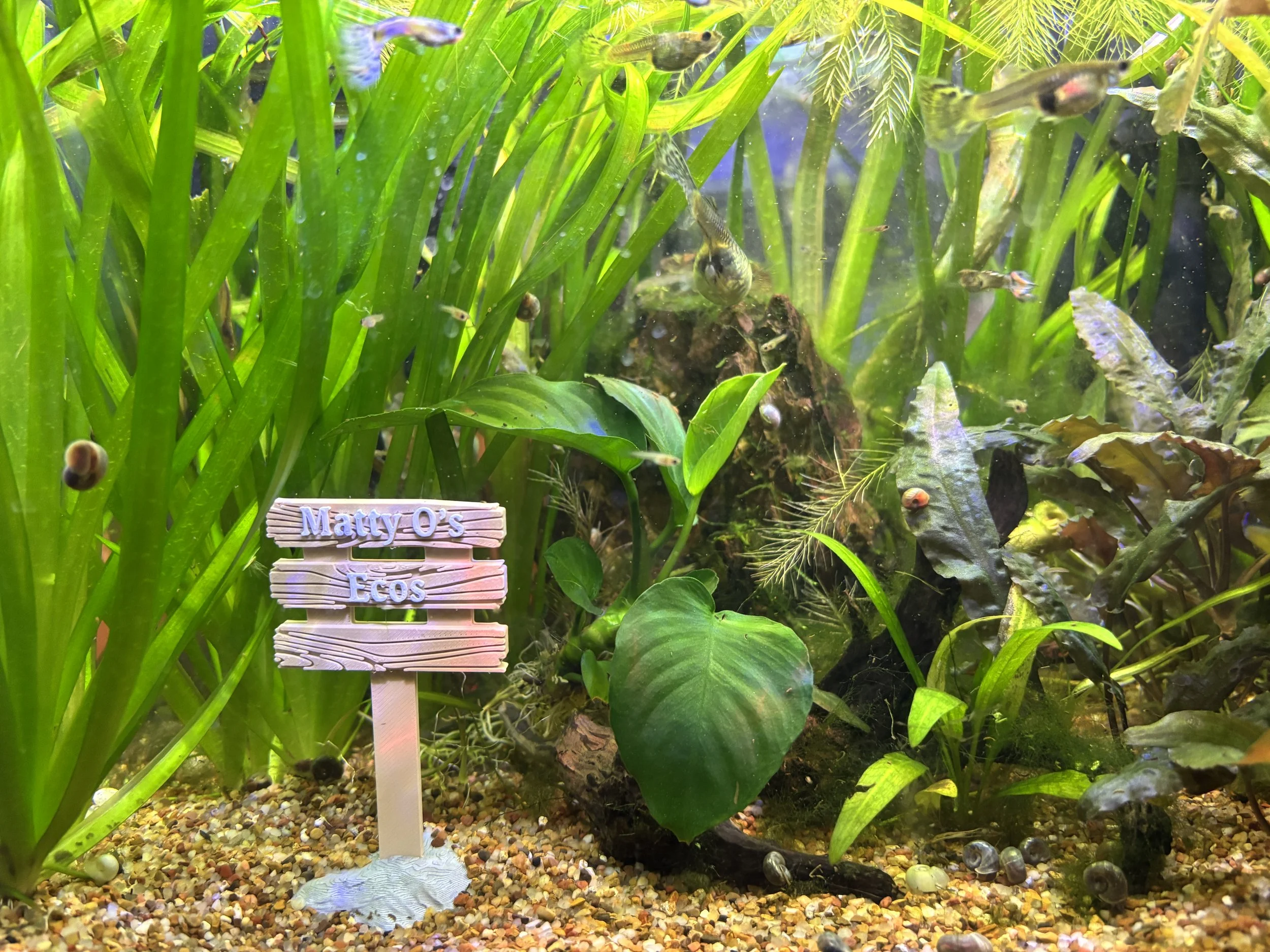
The aquarium is inhabited by a continuously growing population of guppies alongside a small cleanup crew of amano shrimp and ramshorn snails, all of which contribute to the overall balance of the ecosystem. Dense plant growth plays a major role in both the function and appearance of the tank, creating natural cover, grazing surfaces, and nutrient uptake throughout the system. Current plant life includes jungle vallisneria, Anubias barteri, Cryptocoryne wendtii, java moss, dwarf water lettuce, and what appears to be a small Amazon sword plant. Duckweed has also established itself on the water’s surface — despite repeated attempts to control it — and now forms part of the tank’s floating plant layer. Together, the livestock and vegetation create a highly active and naturalistic environment with constant movement and growth throughout the aquarium.
Current State / Future Plans
The aquarium is currently thriving, with plant growth strong enough that fertilizers have never been necessary. The submerged pothos vines grow aggressively above and below the waterline, jungle vallisneria regularly spreads throughout the tank and requires trimming, and floating plants such as dwarf water lettuce and duckweed need to be removed routinely to prevent them from overtaking the surface. While the ecosystem itself has become highly stable, future plans are focused more on improving the overall aquascape and visual composition of the tank. I would like to introduce a larger centerpiece piece of driftwood and incorporate plants with more variation in color and texture to break up the predominantly green appearance. Because I already maintain guppies in my larger aquarium, I also plan to gradually shift this tank in a different direction by replacing the guppy colony with a honey gourami centerpiece fish and a smaller supporting community better suited to a calmer, more intentional layout. Possible additions include ember tetras, chili rasboras, pygmy corydoras, or kuhli loaches, all of which would complement the honey gourami’s peaceful behavior and natural aesthetic without overpowering the planted environment.